Surviving the Tides
Unlike placid inland canals, coastal and estuarine floating homes are subject to severe twice-daily vertical movements, corrosive marine environments, and high-wind shear forces.
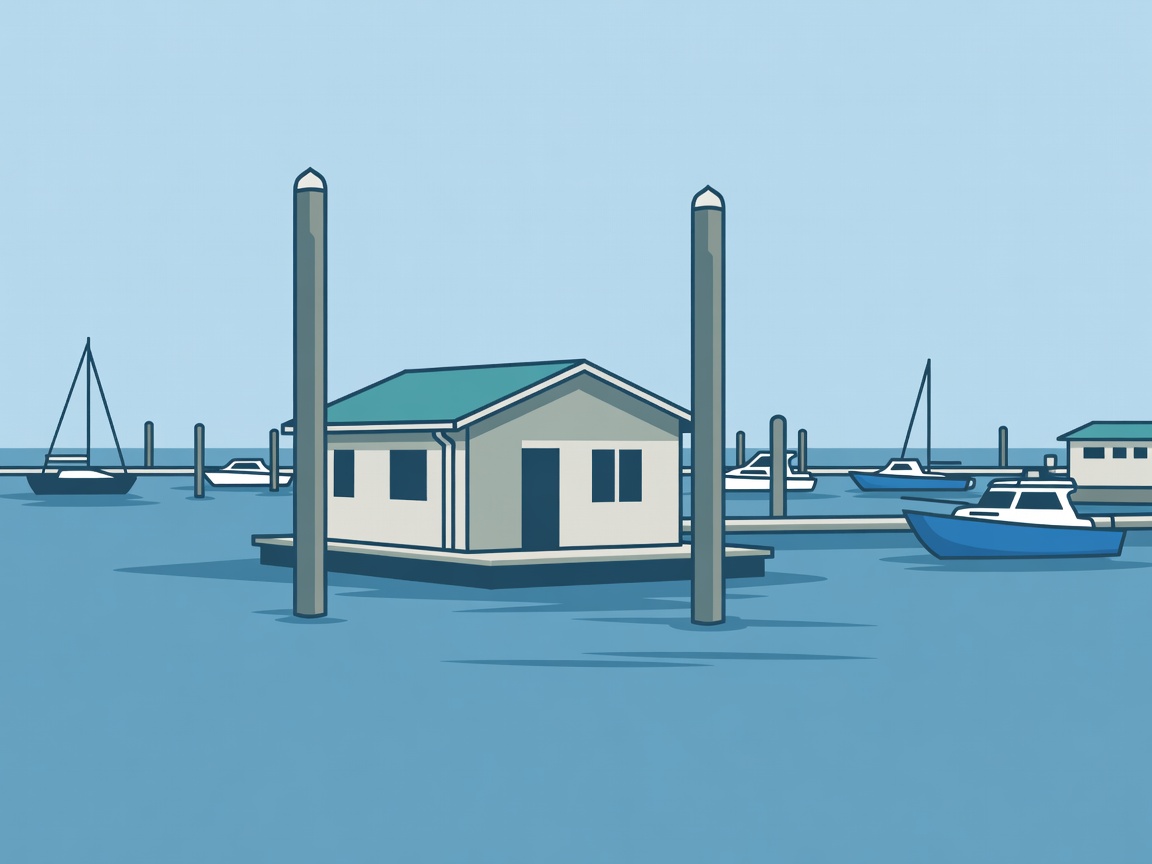
Tidal Mooring Infrastructure
A floating house on a tidal estuary cannot simply be tied to a cleat on a dock. It requires heavy engineering.
Pile HeightTidal Range + 3m
Collar TypeRoller Bearing
Service ConnectionsFlexible Coiled
The Saltwater Penalty
Salt spray degrades standard building materials rapidly. Exterior cladding must be marine-grade (such as acetylated wood, high-density fiber cement, or marine aluminum). Window frames require anodized coatings to prevent pitting and seal failure.
Service Flex Dynamics
Electricity, potable water, and sewage lines must accommodate the entire tidal range. This is achieved using heavy-duty coiled umbilical systems. A failure in a sewage umbilical during an outgoing spring tide is an environmental and financial disaster. Maintenance checks are required monthly.
≈
Draught and Grounding
If your mooring dries out at low tide, the hull must be engineered to sit on the mud (a "mud berth") without structural deflection. Ferrocement pontoons are ideal for this, whereas lightweight fiberglass hulls may crack under point-loading from debris.