Hurricane-Proof Buoyancy
Amphibious architecture represents the synthesis of traditional land-based home building and marine engineering. These structures spend 99% of their lifespan resting on solid foundations, but are engineered to float gracefully during extreme flood events.
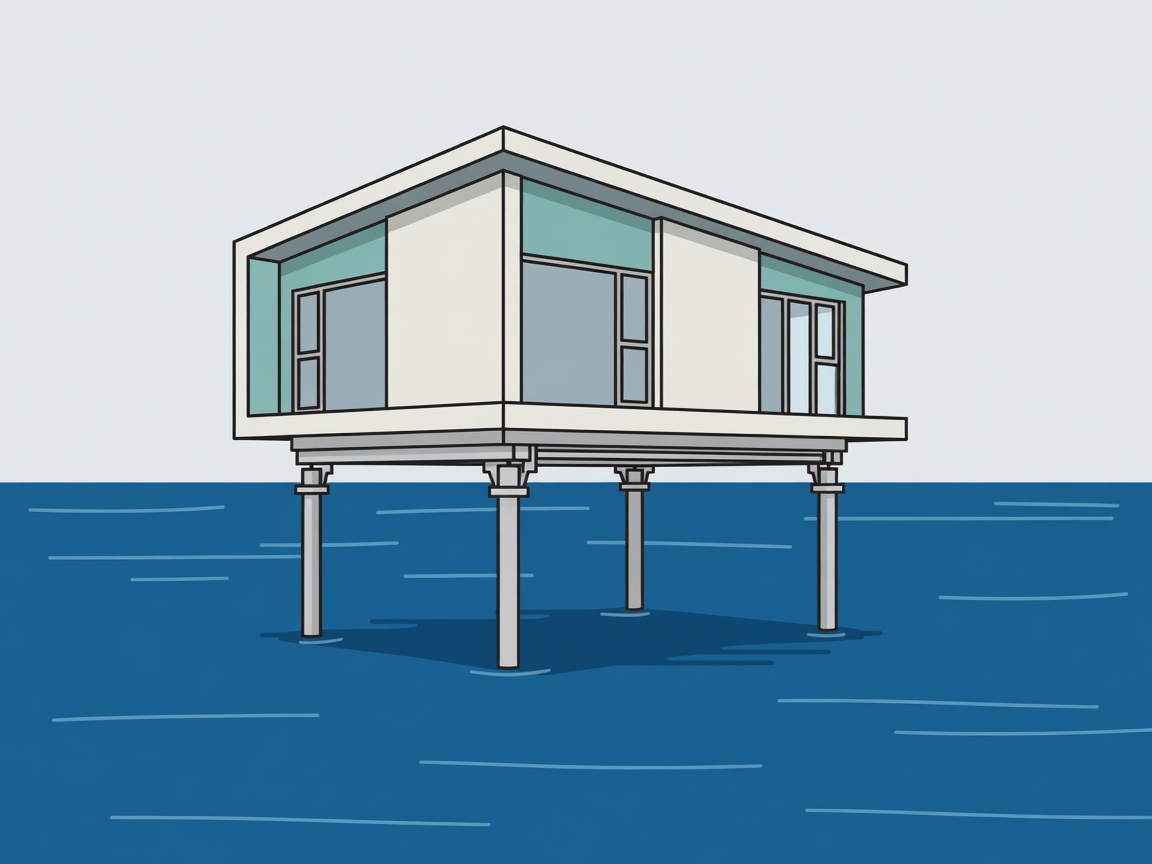
Structural Separation
The critical innovation of an amphibious home is the detachment of the dwelling from its ground foundation.
Buoyancy CoreEPS Blocks
ChassisSteel Space Frame
GuidanceVertical Dolphins
The Buoyant Base
Instead of a concrete slab, the house is built on a hollow or foam-filled pontoon chassis. When floodwaters inundate the surrounding land, water fills a concrete pit (the wet dock) beneath the home, creating upward hydraulic pressure that lifts the entire structure.
Vertical Guideposts
To prevent the house from floating away or rotating, heavy steel guideposts (dolphins) are driven deep into the bedrock. The house's chassis features bearing-lined sleeves that slide smoothly up and down these posts. Crucially, the posts must be taller than the maximum predicted 500-year flood level, plus a safety margin for wave action.
▲
Breakaway Services
Utilities must utilize "breakaway" or highly coiled flexible connections. Gas lines are often prohibited entirely in favor of self-contained electric induction and solar-battery arrays housed within the buoyant structure itself to ensure power remains during isolation.